What Happens When You Sell a Home With a Mortgage in Oahu Today

Selling your home while you still have a mortgage is completely normal. In fact, many Oahu homeowners sell before their loan is paid off in full. The key question is simple: after your mortgage, closing costs, and any other expenses are paid, how much will you actually walk away with?
That answer depends on your current loan payoff, your home’s market value, and the local details that come with selling property on Oahu.
This guide explains what happens behind the scenes, what sellers should watch for, and how to get a realistic view of your potential net proceeds before you list.

How It Works When You Sell a Home With a Mortgage in Oahu
When you sell a home with a mortgage in Oahu, your loan does not transfer to the buyer. Instead, your mortgage is paid off through escrow at closing.
Here is the basic flow:
You accept an offer from a buyer.
Escrow requests a payoff statement from your lender.
The buyer’s funds are sent to escrow.
Escrow pays off your existing mortgage.
Escrow pays approved closing costs, commissions, taxes, and other charges.
Any remaining funds are sent to you as your seller proceeds.
Your lender will provide a mortgage payoff amount, which is different from the balance you see on your monthly statement. The payoff usually includes the remaining principal, interest through the closing date, and any applicable lender fees.
That payoff number matters because it helps determine your actual equity.
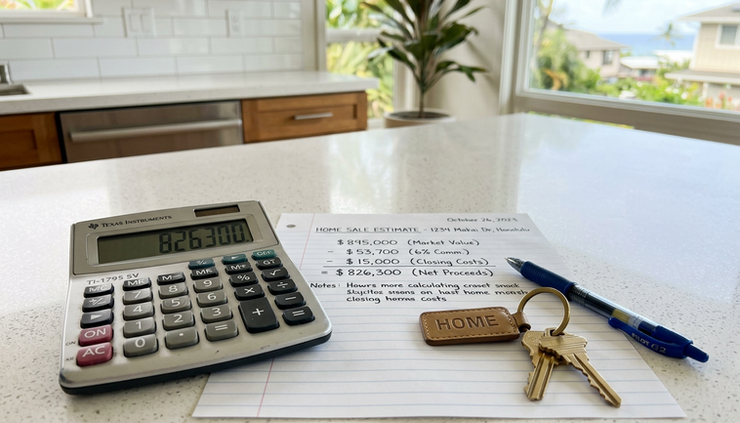
Your sale price is not your take-home amount. Your net proceeds are what remains after the mortgage and selling costs are paid.
Your Equity Is the Starting Point
Equity is the difference between what your home is worth and what you owe.
For example, if your Oahu home sells for $950,000 and your mortgage payoff is $600,000, the starting equity is about $350,000 before seller costs. From there, escrow deducts expenses such as commissions, title and escrow fees, prorated property taxes, possible repairs, credits to the buyer, and any other liens or approved charges.
This is why a strong sale price does not always mean a strong net check. The real number to focus on is your estimated net proceeds.
On Oahu, homeowners should also think about property-specific details that may affect the sale, such as:
Whether the home is fee simple or leasehold
AOAO or HOA fees for condos and townhomes
Special assessments, if any
Solar agreements or liens
Unpermitted improvements
Insurance considerations in coastal or higher-risk areas
Repairs found during the buyer’s inspection
None of these automatically stop a sale, but they can affect timing, buyer confidence, or your bottom line.
What Escrow Pays Before You Receive Your Money
Escrow acts as the neutral party that handles the funds and paperwork. Once the buyer’s money arrives and all closing conditions are met, escrow pays the required items in the correct order.
Common deductions may include:
Your current mortgage payoff
Real estate commissions
Escrow and title fees
Recording fees
Prorated property taxes
HOA or AOAO transfer-related charges
Seller credits negotiated in the contract
Repair credits or agreed repairs
Any liens or judgments attached to the property
If you have a second mortgage, HELOC, or other recorded lien, those usually must be paid off or resolved before the sale can close. This is one reason it helps to review your title and loan details early.
A smooth sale often comes down to knowing the numbers before surprises appear.
What If Your Mortgage Is Higher Than the Sale Price?
Most sellers hope their home value is higher than their mortgage balance. But if the payoff is more than the expected sale price, you may be in a short sale situation.
A short sale means the proceeds from the sale are not enough to fully pay the lender. In that case, the lender must usually approve the sale before it can close. This process can take longer and may involve more documentation.
If your numbers look tight, do not guess. Get a realistic home value review, then compare it with your current payoff. Oahu values can vary by neighborhood, condition, view, building type, and land tenure. A condo in Kakaako, a single-family home in Mililani, and a leasehold property in town can all move differently in the market.
This article is for general information only and should not be treated as legal, tax, or financial advice. For decisions involving taxes, debt, or legal obligations, speak with the appropriate professional.
Why a Local Home Review Helps Before You List
Online estimates can be useful, but they often miss the details that matter on Oahu. They may not fully account for ocean views, permitted additions, building condition, leasehold terms, maintenance fees, school district appeal, or recent neighborhood-specific sales.
A local review can help answer the questions that matter most:
What could the home realistically sell for today?
How does it compare with nearby active and recently sold homes?
What repairs or updates may actually help?
What seller costs should be expected?
What might the estimated net proceeds look like after the mortgage payoff?
The goal is not just to pick a list price. The goal is to understand your options before making a major decision.
What Sellers Should Do Before Going on the Market
A little preparation can make the process cleaner and less stressful.
Start with these steps:
Check your current mortgage balance
Look at your most recent loan statement, but remember that the final payoff will likely be slightly different.
Ask about any second loans or liens
If you used a HELOC, solar financing, or other recorded loan, factor it into your estimate.
Review association documents
Condo and townhome sellers should check fees, assessments, rules, and disclosure requirements.
Estimate selling costs
Include commission, escrow, title, taxes, repairs, credits, and moving expenses.
Get a local value opinion
A neighborhood-specific review gives you a clearer picture than a broad online estimate.
The Bottom Line for Oahu Homeowners
Selling with a mortgage is common, and the process is usually straightforward. Your loan gets paid off through escrow, your selling costs are deducted, and the remaining balance becomes your proceeds.
The most important step is getting clear on your numbers before you list. That means knowing your likely sale price, mortgage payoff, local closing costs, and any property-specific issues that could affect your net.
Curious what your home might realistically sell for today? Request a complimentary review at OahuHomeReview.com. CLICK HERE!



Comments